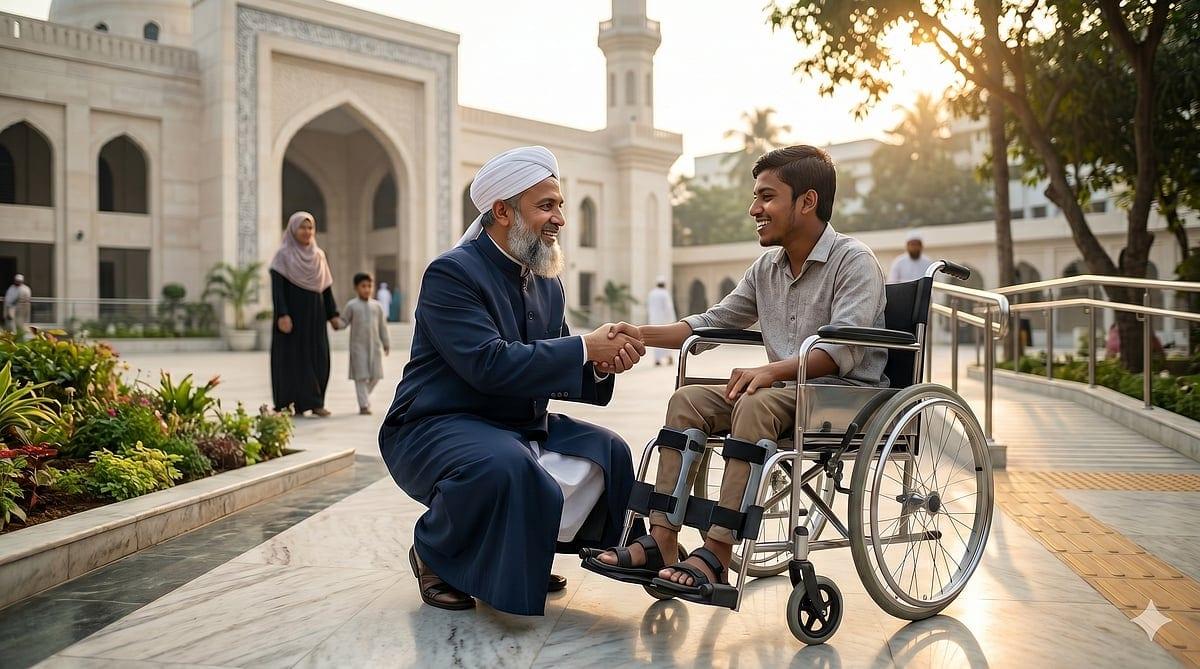
In the materialistic world of today, the most neglected segment of society is known as the 'disabled'. This category includes individuals who, due to physical, permanent, or congenital limitations, lag behind in the pace of time and life.
Islam clearly outlines various rights and facilities for the disabled and a significant portion of Islamic law (fiqh) is dedicated to protecting their rights.
Islam does not impose any economic burden on the disabled and exempts them from the obligation of earning a livelihood. The Quranic verses and hadiths that instruct kind treatment and spending on the weak and helpless include the disabled.
Islamic jurisprudence books detail the obligation of family members to support disabled relatives. Scholars like Allama Qasani have emphasized the duty of able-bodied family members to provide for disabled relatives.
During the Islamic Golden Age, there were state-sponsored provisions for the disabled. Caliph Umar established a system where the state would provide allowances for the disabled from the Bayt al-Mal (state treasury).
Prophet Muhammad (PBUH) was sensitive to the protection of the disabled in social and economic transactions. He introduced 'Khiyare Shart' (conditional right) to protect vulnerable individuals from being cheated in transactions.
The Prophet (PBUH) appointed Abdullah ibn Umm Maktum, a blind companion, as the administrator and prayer leader of Medina during the Battle of Uhud, highlighting the social status and rights of the disabled.
Islam provides exemptions or easier alternatives for the disabled from certain religious obligations. They are exempt from attending Friday prayers and congregational prayers. Wealthier but disabled individuals can perform 'Hajj al-Badal' (proxy pilgrimage) and 'Fidyah' (ransom) instead of fasting.
The disabled are also legally exempt from obligatory military service (Jihad). Allah says, 'There is no sin on the blind, nor on the lame, nor on the sick (if they do not go to war).' (Surah Al-Fath, Ayah 17)
Islam revolutionized the treatment of non-combatants in warfare, prohibiting the killing of women, children, the elderly, the sick, the blind, and the disabled.
Today, while superpowers claim to advocate for the rights of the disabled, they often contribute to the creation of new disabilities through the use of destructive chemical weapons. The disabled community remains underserved and requires strong social strategies and long-term state actions for lasting solutions.