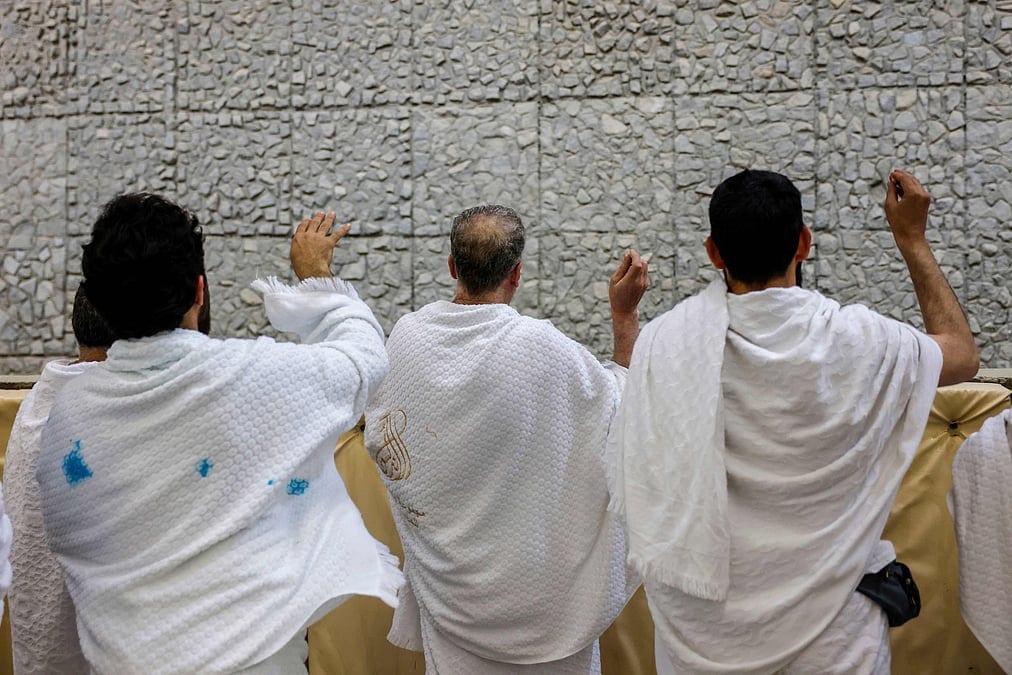
Over 1.7 million Muslim pilgrims gathered in Mina on Wednesday to perform the symbolic stoning of Satan, a crucial and complex step in the Hajj pilgrimage. This ritual commemorates Prophet Ibrahim's (peace be upon him) act of stoning Satan, who attempted to dissuade him from sacrificing his son Ismail as commanded by Allah.
According to the Saudi Press Agency (SPA), pilgrims collected stones in Muzdalifa on Tuesday night and arrived in Mina early Wednesday morning to stone the largest of the three symbolic pillars representing Satan, known as 'Jamrat Al-Aqabah'.
The Saudi authorities ensured the smooth and orderly management of this massive annual gathering through extensive security, health, and transportation measures. Pilgrims, dressed in white ihram garments, walked approximately 25 kilometers from Arafat to Muzdalifa and then to Mina.
In Muzdalifa, pilgrims spent the night in worship and recitation of the Holy Quran. On the third day of Hajj, known as 'Yawm Al-Nahr' or the Day of Sacrifice, they prepared to return to Mina for the first stoning.
After stoning the first pillar, pilgrims performed animal sacrifices and either shaved their heads or cut their hair, marking a partial release from the state of ihram. Many then proceeded to the Masjid Al-Haram in Mecca to perform 'Tawaf Al-Ifadah' (seven circumambulations of the Kaaba) and 'Sa'i' (running between the hills of Safa and Marwah).
Pilgrims will return to Mina in the following days of Tashreeq to perform additional stoning rituals. On Tuesday, they gathered at the Plain of Arafat, performed prayers, and listened to the Hajj sermon at the Namira Mosque before moving to Muzdalifa at sunset.
This year's Hajj saw 1,707,301 pilgrims, a 2.04% increase compared to 2015. Of these, 1,546,655 were from outside Saudi Arabia, and 160,646 were local pilgrims and residents. Most international pilgrims traveled by air.
Saudi officials attributed the increase in pilgrims to improved services, digital Hajj processes, and stronger coordination among security, health, and logistics organizations. The 'Makkah Route Initiative' was expanded, allowing 389,000 pilgrims to complete immigration and customs procedures in their home countries, a 24% increase from the previous year.
Over 441,000 personnel were deployed to manage the Hajj operations, ensuring crowd control, communication, medical services, and emergency response throughout the pilgrimage.