The New Year celebration is a universal festival, transcending religious and political boundaries, with roots deeply embedded in agricultural traditions. Originating from the discovery of the calendar, the tradition of celebrating the New Year began in various parts of the world, primarily centered around agricultural harvests. Initially, these celebrations were based on the lunar calendar and seasonal changes.
Over time, the lunar calendar evolved into a combination of solar and lunar calendars, leading to the global practice of celebrating the New Year. Despite the diversity of cultures and calendars worldwide, the core of New Year celebrations remains agricultural, with the start of the year determined by specific harvest seasons, a tradition that persists today.
The earliest documented New Year celebrations date back to 2000 BC in Mesopotamia and Babylon, known as Akitu, beginning on the spring equinox. Egyptians and Phoenicians started their year in autumn, while Greeks celebrated in winter. The Roman calendar initially began on March 1, but changed to January 1 in 153 BC, a practice continued in the Julian calendar. This led to the global tradition of celebrating the New Year at different times.
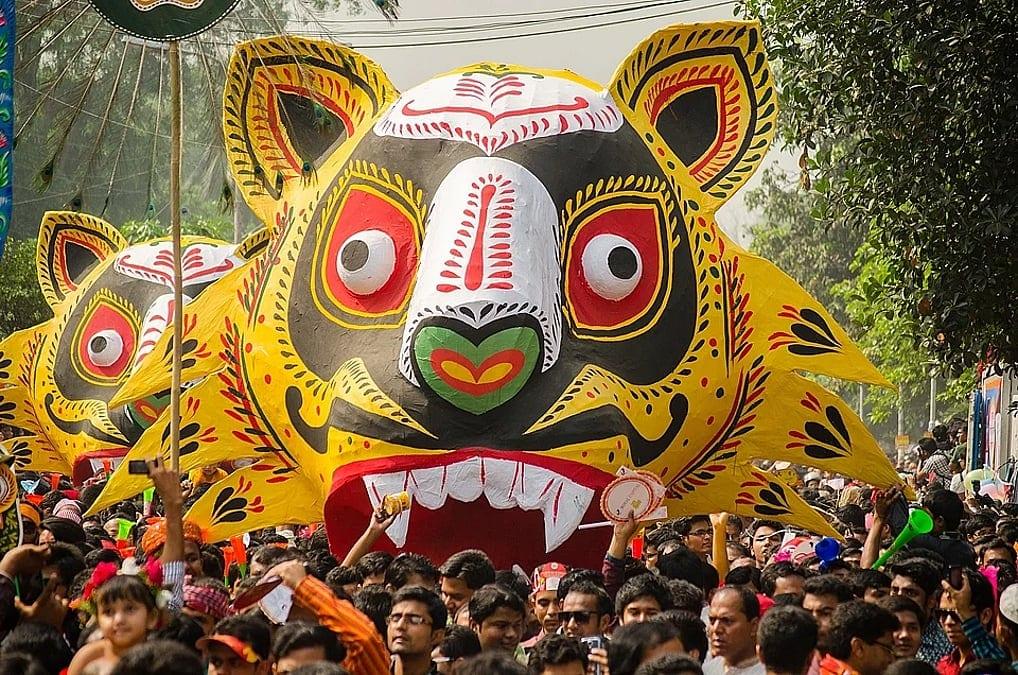
In Bengal, the tradition of celebrating the New Year on Poila Baisakh dates back to 594 AD when King Shashanka introduced the practice based on the solar calendar. Mughal Emperor Akbar later popularized this tradition with the help of astronomer Fatehullah Shirazi. The introduction of the Fasli San or Tarikh-i-Ilahi calendar by Akbar facilitated easier tax collection by aligning with agricultural harvests.
Although the New Year is not a religious festival, it is celebrated universally, transcending religious and political boundaries. Rabindranath Tagore played a significant role in modernizing the celebration of New Year in Bengali culture, emphasizing the continuity of tradition with modernity.