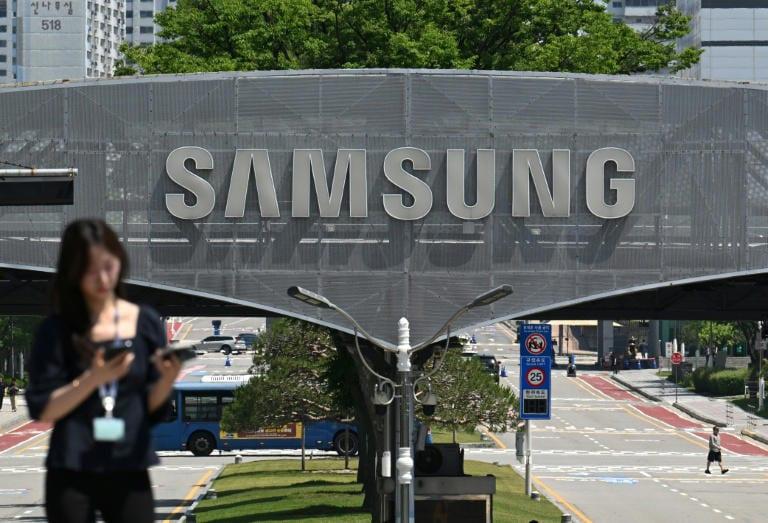
South Korean tech giant Samsung Electronics has projected a nearly 19-fold increase in second-quarter operating profit compared to the same period last year, primarily due to heightened demand for memory chips used in AI applications. The company estimates its operating profit for April-June at 89.4 trillion won ($58.4 billion), marking an 1,810% year-on-year increase. This forecast surpasses market expectations by 6.2% and sets a new quarterly record.
AI-Driven Demand
The surge in profit is attributed to the global frenzy for advanced memory chips, which are crucial for data centers powering artificial intelligence. This demand has already propelled South Korean semiconductor companies, including Samsung and its rival SK hynix, to record profits this year. The AI-driven boom has also intensified workers' demands for higher pay, though Samsung managed to avert a major strike in May by agreeing to worker bonuses.
Investment and Future Prospects
Samsung and SK hynix are jointly investing 800 trillion won in a new semiconductor fabrication hub in South Korea's southwest. Despite some analysts warning of potential delays in AI infrastructure investment, MS Hwang, a research analyst at Counterpoint Research, believes the gap between production capacity and demand is not narrowing. He notes that while less competitive players may face project delays, this does not signify a broad slowdown in AI infrastructure investment.
Economic Impact and Social Implications
The AI semiconductor boom has sparked debates over how South Korea should utilize the increased tax revenue generated by Samsung Electronics and SK hynix. Presidential chief of staff Kang Hoon-sik suggests the windfall will fund large-scale AI and semiconductor projects, reduce inequality, and support young people in accessing housing, founding startups, and finding jobs. The success of these companies has also elevated their social status, with jobs at Samsung and SK hynix now considered highly desirable in the marriage market.
Why This Matters
For Bangladesh, the global surge in AI-driven demand for memory chips highlights the importance of investing in technology and semiconductor industries. As countries like South Korea reap significant economic benefits from this sector, Bangladesh could explore opportunities in technology education, research, and manufacturing to capture a share of the growing global market. Additionally, the social and economic impacts observed in South Korea underscore the potential for technology-driven growth to influence societal norms and economic disparities.